What Is the Easiest Way to Spot a Well-Designed Live Dealer Set?
The easiest way to spot a well-designed live dealer set is to watch what happens on a small screen. Can you identify the dealer quickly? Is the table surface readable? Does the room suggest a particular atmosphere without competing with the game? If the answers are yes, the set is probably doing its job.
That test matters because a live studio broadcast is not simply a room with a camera pointed at it. It is a carefully framed environment that has to work for viewers watching at different sizes, often through phone browser access and without a required app download. The set needs to look distinctive, but its visual details must not get in the way of following the action.
Casino glamour has a recognizable visual vocabulary: polished surfaces, rich colors, deliberate lighting, and details that hint at ceremony. The challenge is using that vocabulary with restraint. A strong set gives the viewer a sense of occasion while keeping the dealer, cards, wheel, or other game elements easy to follow. A weak one may look impressive in a wide studio shot but become a jumble of reflections, patterns, and bright accents on a phone.
Start with the three-second test
Open a live dealer broadcast and give yourself a few seconds to answer three questions: Where should I look? What is happening at the table? Can I distinguish the dealer from the background? This quick check reveals more than a list of expensive finishes ever could.
A well-framed clear dealer outline is one of the first signs of a considered set. The dealer should be visually distinct from the wall or feature behind them, with enough separation in tone, color, and lighting to remain legible when the video is reduced to a narrow phone display. The outline does not need to be dramatic. It needs to be easy to read.
Next, check whether the table surface readable at a glance. Important markings should be visible, and hands or game pieces should not disappear into glare or dark shadows. The viewer should not have to study the screen to work out where an action is taking place.
Finally, look for an uncluttered background. That does not mean a bare room. A set can have character, texture, and a clear point of view. But decorative objects should support the setting rather than compete with the game. If your eyes keep wandering from the dealer to a bright wall feature, a reflective ornament, or a busy pattern, the room may be over-designed for its purpose.
Glamour is a visual vocabulary, not a dress code
Casino glamour works because it uses familiar visual cues to make an ordinary viewing moment feel like an occasion. Gold can suggest ceremony; dark wood can add weight; velvet-like textures can soften a room; a sculptural light fixture can give the camera a recognizable focal point. Used thoughtfully, these choices tell the viewer what kind of atmosphere the set is aiming for.. Pretty simple.
But glamour is not the same as putting every casino reference into one room. A live studio does not need to imitate a movie casino, and it certainly does not need to turn the dealer into part of a costume. The set should establish a mood without making theatrical decoration the main event.. That said, there are exceptions
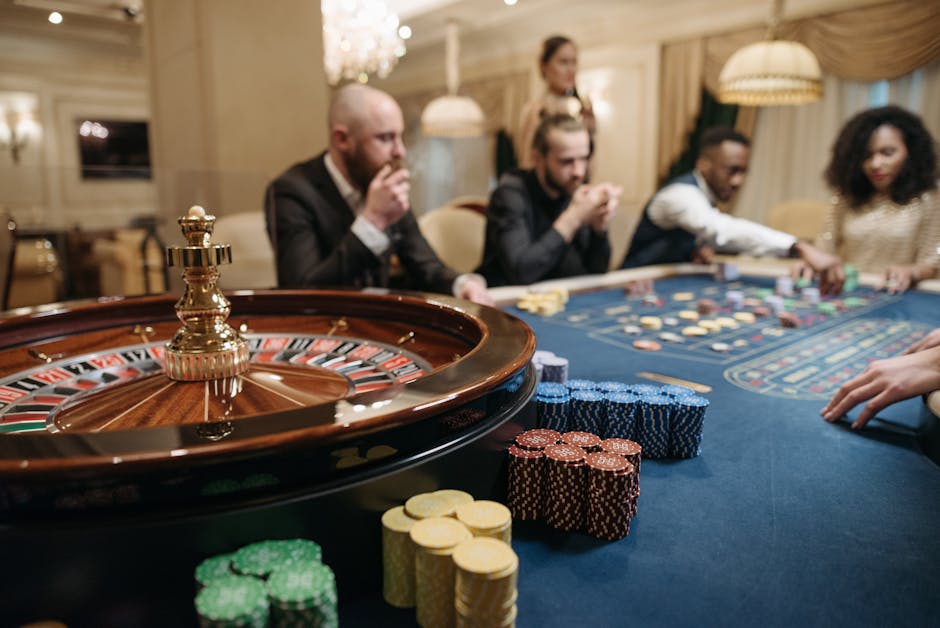
That distinction is familiar in hospitality design. The interiors of a landmark venue such as Casino de Monte-Carlo carry a specific history and sense of occasion. A live broadcast studio may borrow from the broader language of formal casino interiors, but it has different practical demands: a fixed camera view, equipment, clear sightlines, and game surfaces that must remain visible. The reference can be atmospheric without becoming a literal copy.
Coverage by CNA Luxury (Channel NewsAsia) offers another useful lens on how design and hospitality settings communicate identity. When assessing a live set, notice how its materials and details create a sense of place. Then ask the more practical question: do those same details still work when the room is compressed into a phone-sized frame?
Look for occasion in the details
A sense of occasion usually comes from a few coordinated choices rather amairaskincare.com than a room packed with statement pieces. A considered palette, a well-placed light feature, a textured wall, or a clean architectural line can be enough to give a studio an identity. Repetition and consistency matter more than the number of decorative objects.
Let me tell you about a situation I encountered wished they had known this beforehand.. In a broadcast setting, design choices also have to hold up under studio lighting and camera conditions. A glossy surface may look striking in person but produce distracting reflections on camera. A deep color can create a rich backdrop, but if it sits too close in tone to the dealer’s clothing, the figure may lose definition. Patterns can add interest in a room, yet appear visually noisy when the image is small or compressed.
These are not arguments for blandness. They are reminders that each finish has a job. The most successful details create atmosphere in the spaces around the action, while leaving the action itself clear.
Decorative detail or useful detail?
Try sorting the set’s features into two groups: those that help establish the scene and those that make it easier to watch. Some features do both. A backdrop with a restrained geometric motif, for example, might add character while framing the dealer. A bright decorative object placed right beside the table might add little beyond visual competition.

Decoration that steals space from usability is a poor trade. In live studio broadcasts, screen space is limited even when the studio itself is large. The camera crops the room, overlays may use part of the picture, and viewers may be watching in a browser window alongside other phone interface elements. Every visual element needs to earn its place in the frame.
Follow the visual hierarchy
Visual hierarchy is the order in which a set invites you to notice things. In most live dealer formats, the priority is straightforward: the game area and the dealer should be immediately apparent, while the set provides supporting context. If the background has stronger contrast or brighter highlights than the table, the hierarchy may be reversed.
Movement through a room matters, too. Even though viewers are usually seeing one fixed camera angle, the arrangement of the set can suggest where attention should travel. Lines in the floor, wall panels, counters, and light features can guide the eye toward the table—or pull it sideways. Good composition makes the table feel like the destination. It does not ask the viewer to tour every corner of the studio.
When a camera view includes several layers, pay attention to how they relate:
- Foreground: The table and dealer should remain the clearest, most important elements.
- Middle ground: Furniture, architectural features, or equipment should frame the action without blocking it.
- Background: Color, texture, and signage can establish atmosphere, but should not form a competing focal point.
Ask yourself this: this is why a set can be visually rich and still feel easy to use. The background gives the room a personality; the foreground keeps the viewer oriented. A useful test is to pause the broadcast and notice what catches your eye first. If it is not the game area or dealer, consider why.
Judge the set on a phone, not just on a studio monitor
A full-size studio monitor can make subtle details feel obvious. On a phone, those details may disappear, merge together, or become distracting. The smaller the screen, the more important it is to preserve strong shapes and clear differences between foreground and background.
Phone browser access, with no required app download, can make a live broadcast easy to reach. But convenience does not guarantee a good viewing experience. A set designed only for a large screen may lose its visual logic on mobile. The dealer’s face might be too small, the felt markings too fine, or the background too busy to read at reduced size.
Try viewing the broadcast in portrait and landscape if both are available. Notice whether the composition still makes sense when the display changes. Does the table remain visible? Are hands and game elements easy to distinguish? Does the dealer stay separated from the backdrop? A set that survives these shifts has likely been designed with the audience, not only the studio camera, in mind.
What to check What good design looks like What may need attention Dealer visibility A clear dealer outline against the set Similar tones, glare, or visual blending Game area The table surface readable at a glance Reflections, shadows, or markings that are hard to see Background An uncluttered background with a distinct mood Bright accents or patterns that keep pulling focus Mobile framing Important details remain legible on a small screen Fine detail that disappears or becomes visual noise Atmosphere A few coordinated elements create occasion Decoration that overwhelms the room’s practical purposeA practical way to assess any live dealer set
You do not need specialist design knowledge to make a useful assessment. Use this short sequence while watching:
- Find the focal point. Within a few seconds, identify whether the dealer and table are where your attention naturally lands.
- Check the edges. Look at the dealer’s outline against the background, especially around the head and shoulders.
- Read the table. Confirm that the surface, markings, and actions are clear on your actual device.
- Notice distractions. Watch for reflections, repeated patterns, bright highlights, or decorative objects that compete with the game.
- Reduce the view. If possible, make the video smaller or switch orientation. See whether the composition still holds together.
- Ask what each detail contributes. Does it create atmosphere, guide attention, or support the room’s identity? If not, it may be taking up attention without helping.
Consistency matters more than spectacle
A well-designed set should feel coherent from one broadcast to the next. That does not mean every studio needs the same palette or furniture. It means the lighting, finishes, camera framing, and visual identity should seem to belong to the same environment. When one decorative element feels disconnected from the rest, it can make the room look assembled rather than designed.
Consistency also helps viewers settle into the broadcast. A stable visual hierarchy means people can quickly locate the dealer and game area, even when the set has a distinctive style. The design can be memorable without asking the audience to relearn where to look.
When companies such as MrQ present live dealer content, the studio design is part of the overall viewing experience, alongside the way the broadcast appears on a device. The same basic test applies across providers: does the set give the game a clear stage, and does that stage work in the format people actually use?
The simplest answer
The easiest way to spot a well-designed live dealer set is to see whether it makes the broadcast feel special without making it harder to follow. Look for a clear dealer outline, an uncluttered background, and a table surface readable on the screen you are using. Then check that the room’s visual hierarchy leads your eye toward the action rather than scattering it across decorative details.
Casino glamour can create a recognizable sense of occasion, but good design knows when to stop. The strongest sets make deliberate use of color, materials, and lighting, then leave enough visual breathing room for the dealer and game to stay clear. If the set works on a phone as well as it does in a studio, that is a more convincing sign of craft than a wall full of ornament.